
Why Do I Hyperfocus on Everything Except What I Need to Do Today?

Why Do I Hyperfocus on Everything Except What I Need to Do Today?

You’re at your desk, ready to tackle a very important project that you need to get done this week. You are just starting to work on your laptop. Then you see a few disorganized emails in your inbox, so you sort them into a folder. Three hours later, your email inbox may be empty, but your important project is still nearly untouched. It can be confusing to spend hours on a small task but struggle to work on the big one. This is a common issue for people with ADHD. It is known as hyperfocus.

Understanding the ADHD Brain and Attention

A lot of people think that having ADHD means you can’t focus on anything, but that’s a big misconception. In reality, the core challenge with ADHD isn’t a lack of focus. It’s difficulty regulating and shifting it. When you need to change your attention from one action or thought to another, your brain has a hard time doing it.
If you find something interesting, your brain “grabs” it and won’t let you go. This occurs because the ADHD brain is always seeking dopamine. Dopamine is a chemical that makes you feel good and rewarded. Tasks that do not stimulate sufficient dopamine release in your brain are dull and uninteresting. Pleasurable or complex activities provide strong and timely rewards. That’s one reason not to do your taxes but to clean your entire house instead.

The Difference Between Hyperfocus and a Flow State

Hearing the term “flow state” might bring to mind people who are successful. A flow state is when you work with a certain level of intensity on an important task and forget about time in a good and healthy way. Hyperfocus is quite different from a flow state.
Often, hyperfocus occurs when you are avoiding something else that causes anxiety or overwhelm. Rather than a useful tool, it is more like a pitfall. Perhaps, despite the need to eat or be with your loved ones, you are unable to break away from a random activity.

Why Your Brain Chooses the Wrong Tasks

The fastest way to improve your mood is to accomplish the simplest task your mind can handle. Important tasks are often challenging, monotonous, or time-consuming. It’s easy to get quick results from a one-time task like organizing a drawer or playing a video game.
The ADHD brain is constantly craving immediate results and quick rewards! So, when you’re feeling stressed, say due to a big work or school project, your brain does what it can to distract you and relieve you of that stress. Getting absorbed in a completely unrelated project is your brain’s clever way of escaping the stress of the bigger, more daunting assignment.

The Hidden Costs of Unplanned Hyperfocus

Hyperfocus might sound like a superpower when you first hear about it. Sometimes it can help you finish a project you really love in record time. However, unplanned hyperfocus comes with many hidden costs that can hurt your daily life.
When you spend all your energy on the wrong things, your important responsibilities begin to pile up. This creates a cycle of stress and anxiety that is hard to break. You might end up staying awake all night to finish the work you avoided during the day. This lack of sleep makes your ADHD symptoms even worse the next morning.

Signs You Are Caught in a Hyperfocus Loop

It’s really hard to see when you’re in a hyperfocus loop. You may feel really productive at first, but the feeling quickly turns into frustration when you realize what you missed. Keep an eye out for these common warning signs in your everyday life:

  • You lose track of time completely and miss important appointments or planned meals.
  • You get very irritated or angry if someone interrupts what you are doing.
  • You neglect basic physical needs such as going to the bathroom or drinking enough water.
  • You feel a heavy sense of guilt after the activity is over because you ignored your real priorities.
  • Your surroundings become a blur as your attention focuses on one single item.

Effective Strategies to Break the Hyperfocus Spell

You don’t have to let hyperfocus rule your days forever. You can learn to bring your attention back to where it belongs. Try using these practical steps to regain control of your time and your focus.

  • Establish Firm External Time Signals: Place a loud alarm across the room, so you have to get up and walk to it to turn it off. Get your body moving and you will break the trance.
  • Make Forced Interruptions: Ask a trusted friend or family member to call you at a certain time to interrupt your task.
  • Break Big Tasks into Tiny Steps: Make your important work feel less scary by cutting it into smaller pieces. A smaller step is easier to start and it gives your brain a quicker reward.
  • Schedule Your Distractions. Give yourself a set time to do the fun or random tasks so they do not take over your entire day.
  • Change Your Environment: When you have boring work to do, change to a different room or a coffee shop so your brain knows it is time to focus.

How ASIC Behavioral Health Can Help You Manage ADHD

Trying to figure it all out alone can feel really overwhelming when you have ADHD. You may feel like you are always behind no matter how hard you try. At ASIC Behavioral Health, we know how the ADHD brain works and why it feels so exhausting to direct your attention where it needs to go.
Our caring team in Fayetteville helps you find the root causes of your attention issues. We don’t hand out generic advice that doesn’t fit your daily life. We put a plan together that is personalized to your life and needs. Dr. Adrian Lennon and our experienced staff are here to help you with medication management or behavioral strategies. You deserve to feel in control of your time and your objectives. Call ASIC Behavioral Health today at (910) 672-6432 to book an appointment and learn how to manage your ADHD for good.

FAQs

Q. Is Hyperfocus the Same as a Flow State?

No, they are very different. A flow state is healthy and helpful. Hyperfocus often happens just to avoid hard or boring work.

Q. How Can a Person Break a Hyperfocus Loop?

Try setting a loud alarm in another room. Having to stand up to turn it off helps the brain snap out of the spell.

Q. Why Does the Brain Pick the Wrong Tasks to Do?

Big jobs cause stress. Small tasks give the brain a fast reward and a quick break from that heavy worry.

Emotional Well Being

How Do I Stop Minimizing My Own Emotional Well-Being for the Sake of Everyone Else?

Do you often put your own feelings last?
Maybe you say yes to things you don’t want to do. Maybe you hide your worries so no one else feels bad.
Many people, especially women and others socialized to prioritize others, do this. You may think you are being kind or strong. But over time, ignoring your own needs can hurt your mental health.
At ASIC Behavioral Health, our mission is to provide empathetic mental health treatment that prioritizes your healing.

Let’s look at how to stop minimizing your own emotional well-being for the sake of everyone else.

What It Looks Like to Minimize Yourself

Minimizing your emotional well-being can be quiet. It may not look like a big problem. But it shows up in small moments.

  • You say “I’m fine” when you are not fine
  • You feel guilty for resting
  • You stay quiet to avoid making waves
  • You take care of everyone and forget to check in with yourself
  • You tell yourself your problems are not big enough to matter

These habits may feel normal. However, all of these are symptoms of pushing away what is best for you. You may have learned to do this as a child. Maybe you were praised for being “good” or “easy.”
Over time, you learned that keeping the peace was more important than feeling your own feelings.

Why This Pattern Is So Common

Many people grow up hearing that they should always help others. This message can come from family, friends, or society.
Girls and women may learn from a young age to be kind, helpful and caring. They may feel they must always put others first.
You might also feel that you’ll hurt others when you refuse. It might seem like if you don’t keep feeding and promoting, people will go away. They are real and very common fears. However, they can put you in a situation where your needs are never fulfilled.

The Real Cost of Ignoring Your Needs

When you push your feelings away, they do not just vanish. They can show up in your body and your relationships. Over time, this can leave you fatigued or even make you feel unwell.
Some people get headaches or have trouble sleeping. You may experience anger towards those you love.
This anger is sometimes called resentment. You may get angry with your children, friends, or spouse about minor issues. This can happen because your own cup is empty. You may need a break, but you aren’t taking it.

Signs You Are Ignoring Your Own Needs

Look at your daily life. Do you do any of these things?

  • You say yes to favors when you are already very tired
  • You feel bad or guilty when you ask for help
  • You keep quiet just to avoid a fight or tension
  • You feel numb or like you are just watching your life pass by
  • Your body hurts, or you get headaches from holding in stress

Simple Steps to Put Your Emotional Well-Being First

Start With Small Pauses

Before you say yes to a new request, stop. Take one deep breath. Ask yourself:

  • Do I have time for this?
  • Am I too tired?
  • Do I really want to do it?

You do not have to answer right away.
You can say, “Let me think about it.”
This gives you time to make the best choice for yourself.

Name Your Feelings

Do not run away from difficult feelings. If you feel sad, mad, or tired, admit it to yourself. Say it out loud. You can say, “I feel very stressed today.” You can also write your feelings in a notebook. This helps your brain slow down and process what is happening.

Set Gentle Boundaries

Boundaries are simple rules to keep your mind safe. They do not have to be mean or loud. You can use a soft, kind voice. Try saying:

  • I need a short break right now.
  • I cannot help with that today.

Every time you speak up, you build trust in yourself.

Let Go of Guilt

When you say no for the first time, you might feel bad. Guilt may try to make you think you did something wrong. But taking care of yourself is never a bad thing. Let the guilt sit there, but do not let it change your mind. The guilt will get much smaller over time.

Care for Your Body

Your mind and body work together. Try to eat healthy meals, take short walks and get enough sleep. Doing nice things for your body makes it easier to handle big feelings when they come up.

Healthy Choices vs. Unhealthy Habits

Let’s look at the difference between taking care of yourself and hiding your needs.

What It Looks LikeUnhealthy Habit (Minimizing)Healthy Choice (Self-Care)
When asked for a favorSaying yes when you are very tiredSaying “I cannot help out today.”
When feeling upsetPushing it down and faking a smileWriting in a journal or taking time to cry
Making weekend plansLetting everyone else pick the activitiesSharing what you really want to do

Give Yourself Grace and Time

Change does not happen in one single day. You have spent years putting others first. It will take time to learn a new way to live.
Be very gentle with yourself. If you mess up and say yes when you meant no, forgive yourself quickly. Tomorrow is a brand-new day to try again. Remind yourself daily that you are worthy of rest and care.

Finding Support at ASIC Behavioral Health

You do not have to fix everything alone. Talking to a professional can help you find your voice again. At ASIC Behavioral Health, we care deeply about women’s mental health. Our clinic gives you a warm, safe place to talk.
Dr. Adrian Lennon and our kind team will listen to your unique story. We help women with anxiety, stress, trauma and sadness. We use careful medication management and supportive therapy to help you heal and grow. We treat you with the deep respect you deserve every step of the way.

FAQs

Why is it so hard for women to say no?

Saying no feels hard because we fear people will get mad at us. Women are often taught to be sweet and helpful from a young age. We worry we will lose a good friend or upset our family. But true friends will respect your limits.

Is setting limits selfish?

No, setting limits is never selfish. It is how you stay healthy. You cannot pour water from an empty cup. You must take care of yourself before you can truly help anyone else.

Will people stop liking me?

Some people might feel surprised at first. They are used to you always saying yes. Give them time to adjust to the new you. The people who truly love you will be happy that you are taking better care of yourself.

Can therapy help me stop pleasing people?

Yes, professional help makes a very big difference. A provider can help you find out why you hide your needs. They can teach you safe ways to speak up, set limits and feel strong in your daily life.

Time to Care for You

You do not have to put yourself last anymore. Your feelings matter just as much as anyone else’s feelings. Start taking small steps today. Say no when you are tired. Take time to rest. Speak your truth.
If you need help finding your brave voice, reach out to us today. We are ready to support your mental health journey. Contact ASIC Behavioral Health to book an appointment.

Call: (910) 672-6432

Email: info@asicbehavioral.com

Let us help you put your well-being first.

Medication management

Is My Meds-Only Approach Giving Me Control, or Just Managing the Symptoms?

Taking pills for mental health brings up a huge question. Do they let you take your life back? Or do they just keep all your feelings quiet? Many people weigh this balance. It is a very fair thing to ask your doctor today. Medicine is a strong tool, and proper medication management helps ensure your treatment supports your mental health and overall well-being.

What “Managing Symptoms” Really Means

Managing symptoms means pills turn down the noise of your worst feelings, so you can just get through a tough day. They might calm deep worry (allowing you to rest) or they might lift a dark mood so you can rise. Real control goes way past making the bad pain stop. Control means you truly take charge of your health.

Signs Your Medicine Is Helping You Feel in Control

When the path is right, you will feel bright spots in your day. Here are the top signs of full control today:

  • You sleep, eat and think much better than you did before your care.
  • You know why you take each pill and what it does to your body.
  • Your side effects are tiny and your doctor went over all of them fully.
  • You feel stable during tense times, instead of just feeling dead and numb.
  • You feel brave asking your doctor questions or pushing for tweaks to your plan.

Signs You May Only Be Managing Symptoms

Your medicine might only do part of the job, which leaves you feeling stuck. Here are the top signs that your health plan needs a really close look:

  • Your bad moods rush right back in if you are late taking a single dose.
  • No single specialist has ever said exactly how long you’ll need to take these new pills.
  • You’re constantly exhausted, or you just don’t feel like yourself.
  • Your doctor visits feel rushed and nobody asks about your real daily life.
  • You get simple refills (again) without anyone checking on your healing progress.

Why Medicine Alone Can Leave Gaps

Two people can share the same problem but still feel quite different. Things like poor sleep habits and heavy stress clearly shape your mood. A drug can ease heavy emotional pain. But it cannot fix everything on its own, because it never teaches you how to calm your racing mind. The extra parts of life need more time, kind words and consistent help.

What Good Medication Management Looks Like

Your medicine plan is way more than grabbing a fast refill. It matters and requires deep care. Good plans use clear steps (and regular check-ins) to keep you very safe:

  • A deep check of your feelings, your past health and your dreams.
  • A first medicine and a dose that match your body and daily life.
  • Fast visits with your doctor to track your progress and spot any weird side effects.
  • Safe tweaks to your dose or medicine when you need a new path.
  • Steady visits with your care team, even once you start feeling a lot better.
  • A warm team effort between you, your doctor and your talking therapist.

How Supportive Therapy Adds to Your Control

Talking openly about your deep stress can make your medicine work much better. This warm support lets you spot bad habits and helps you learn new skills so you can beat tough days. At ASIC Behavioral Health, talking help is mixed right into your medicine visits when it fits best, giving you a totally safe space to share all of your heavy daily struggles.

Safety Tips to Keep in Mind

Medicine works best when you use it with careful attention to your body. Keep these safety points in mind:

  • Never change your dose on your own because stopping fast can make you sick.
  • Tell your doctor about every medicine and extra supplement you take.
  • Share your side effects early on, even if they seem small.
  • Be honest if you miss a dose so your doctor can make the best choices.

If you have thoughts of hurting yourself, call 988 right away or go to the hospital.

How ASIC Behavioral Health Can Help

ASIC Behavioral Health is a caring mental health clinic in Fayetteville, North Carolina. We offer custom, loving care for kids and adults who need real help. Dr. Adrian Lennon is an advanced practice Psychiatric Mental Health Nurse Practitioner. She views your whole life to give the best care possible. She never treats feelings in isolation.
Our clinic offers:

  • Full checks on your daily mental health and well-being.
  • Safe, ongoing care for your daily medication plan.
  • Talk support during your regular medication visits.
  • Kind care for ADHD, anxiety, depression, PTSD, insomnia and bipolar disorder.
  • Extra focus on the vital mental health needs of women and minority groups.

Our patients are always heard fully. They are a big part of every single choice about their care.

Final Thoughts

Medicine can be a great, safe tool for your health (and taking it is nothing to ever hide). Still, true, lasting control only comes when you really know your plan. It comes when your doctor hears you and when you have deep support that goes way past the pill bottle.
If you are unsure whether your treatment works, you deserve a very good answer. Call ASIC Behavioral Health at (910) 672-6432 today. Or you can just book a quick, easy visit on our website to check your current plan with someone who truly cares.

FAQs

Q. How does real control feel?

Sleep and eating get much better. The mind feels clear. Patients feel brave enough to ask the doctor hard questions.

Q. Do pills give full control over health?

Pills help calm bad feelings. They do not fix everything alone. Full control means understanding the care plan (and feeling stable).

Q. What shows someone is just managing symptoms?

Bad moods come back fast if a pill is late. Doctor visits feel rushed. A person might feel numb or very tired all day.

Paternal Perinatal and Postpartum Depression

Are Dads Affected Too? Understanding Paternal Perinatal and Postpartum Depression

Yes, dads are affected too.
Paternal perinatal and postpartum depression is a medical condition. It can lead to deep sadness, anxiety, irritability, fatigue, and withdrawal.
Many dads have to deal with these emotions out of shame or the pressure to be “strong,” but it’s not uncommon and depression in new dads is treatable.
With professional treatment at ASIC Behavioral Health, you can recover fully.

What Is Paternal Perinatal Depression?

Most people associate depression during pregnancy and after childbirth with mothers. However, fathers face challenges of their own emotions during this period.
Paternal perinatal depression is depression that affects fathers during their partner’s pregnancy and the first year after the baby is born. When it occurs after birth, it may be called paternal postpartum depression. Both terms apply to fathers. Symptoms can begin during pregnancy or after the baby is born.
Doctors know about this condition. About 10% of fathers have depression in the perinatal period, according to research findings. The rates can be higher if anxiety and stress-related disorders are added.

How Common Is Depression in New Fathers?

New dads are not alone in how they feel.
Here are some key facts:

  • About 1 in 10 dads may have depression during pregnancy or after the baby is born
  • If a mom has depression after birth, her partner may also be at risk
  • Without help, these feelings may last a long time

Getting help early can make a big difference.

Why Do Fathers Experience Perinatal Depression?

Several factors contribute to depression in new fathers. By knowing these causes and who is most vulnerable, families can get help immediately.

Hormonal Changes

Men experience hormonal shifts when their partner becomes pregnant. Testosterone levels can decrease and estrogen and prolactin increase. These changes make fathers ready to care for the baby, but may also lead to changes in mood management.

Sleep Deprivation

New parents face constant sleep disruption. Fathers may have to worry about work duties, while also having to get up with the baby at night to feed and care for the baby. Long-term lack of sleep impacts the brain’s chemical and emotional balance.

Primary Risk Factors

Clinical research indicates that certain fathers are at a much higher risk for developing paternal depression. These risk factors are:

  • Maternal Depression

A father’s risk spikes significantly if his partner is currently experiencing maternal postpartum depression.

  • Personal History

Any history of depression or anxiety in the past.

Socioeconomic Stress: Financial insecurity or significant dissatisfaction before childbirth.

  • Obstetric Complications

A colic baby, a premature birth, or a traumatic delivery experience.

What Are the Signs and Symptoms of Paternal Depression?

Fathers may show depression differently than mothers. Recognizing these signs helps families get support faster.
Common signs include:

Symptom CategoryWarning Signs in Fathers
EmotionalSadness, irritability, anger, mood swings
ActionStaying away from family or not wanting to care for the baby  
PhysicalFeeling tired, eating more or less, or having trouble sleeping
CognitiveTrouble thinking or making choices
Social LifeStaying away from friends and family

Some dads may work too much to avoid stress at home. Others may drink more alcohol or stop doing things they once enjoyed.
If these signs last or make daily life hard, it is better to talk to a doctor.

How Is Paternal Depression Diagnosed?

If you recognize the symptoms above, a medical professional can help. Mental health is normally evaluated with standardized screening tools. You may be asked to complete the following questionnaires:

  • Edinburgh Postnatal Depression Scale (EPDS)
  • Patient Health Questionnaire (PHQ-9)

The simple “yes” or “no” questions asked and the evidence-based answers reported, allow your therapist or physician to get a fair assessment of the severity of your symptoms and determine what’s best for you.

How Does Paternal Depression Affect Families?

When Dad is depressed, it is difficult for the whole family.

Effects on the Child

Children with depressive fathers are at increased risk for behavioral disorders and developmental delays. Fathers who absent themselves from the picture lose critical opportunities to bond with their children and can also impact their children’s emotional security and social abilities later in life.

Effect on the Partner

A mum may feel isolated if her partner is depressed or withdraws.
She could have to work more at home and take care of the infant with less help. This can cause her to feel fatigued and stressed out.
It can be easier for families to live when both parents obtain aid.

What Are the Treatment Options for Paternal Depression?

Fathers don’t have to bear it alone. Several effective treatments help men recover and enjoy fatherhood.

Professional Counseling

Therapy allows fathers to express feelings without judgment. CBT helps people identify unpleasant thoughts and develop coping skills. Family therapy can help with communication and relationship issues.
ASIC Behavioral Health offers specialized counseling services for fathers experiencing perinatal and postpartum depression. Our staff is aware of the special concerns men have during transition. Visit us to learn about available programs.

Medication

Antidepressants may be useful for moderate or severe symptoms. Doctors work with patients to find the right medication and dosage that will not interfere with parenting responsibilities.

Evidence-Based Lifestyle Changes

In addition to professional care, dads can make daily simple steps to support their own mental wellbeing:

  • Exercise

Try walking, playing a sport, or doing another fun activity

  • Get more sleep

Take turns with your partner when caring for the baby at night

  • Drink less alcohol

Alcohol can make sleep and sadness worse

  • Spend time with your baby

Hold your baby, talk to them and enjoy quiet time together

When Should You Seek Professional Help?

Some signs mean it is time to contact a healthcare provider immediately:

  • Thoughts of harming yourself or the baby
  • Inability to function at work or home
  • Persistent sadness lasting more than two weeks
  • Substance abuse to cope with feelings

ASIC Behavioral Health offers caring treatment for fathers and families. Contact us to begin the healing process.
In the United States, call or text 988 for help during a mental health crisis.

FAQs

Do fathers with depression need medication?

Mild depression may improve with therapy and lifestyle changes. Moderate to severe cases often need medication and counselling.

Does paternal depression affect children long-term?

Untreated paternal depression can harm child development and lead to behavioral issues. Early intervention can reduce these risks.

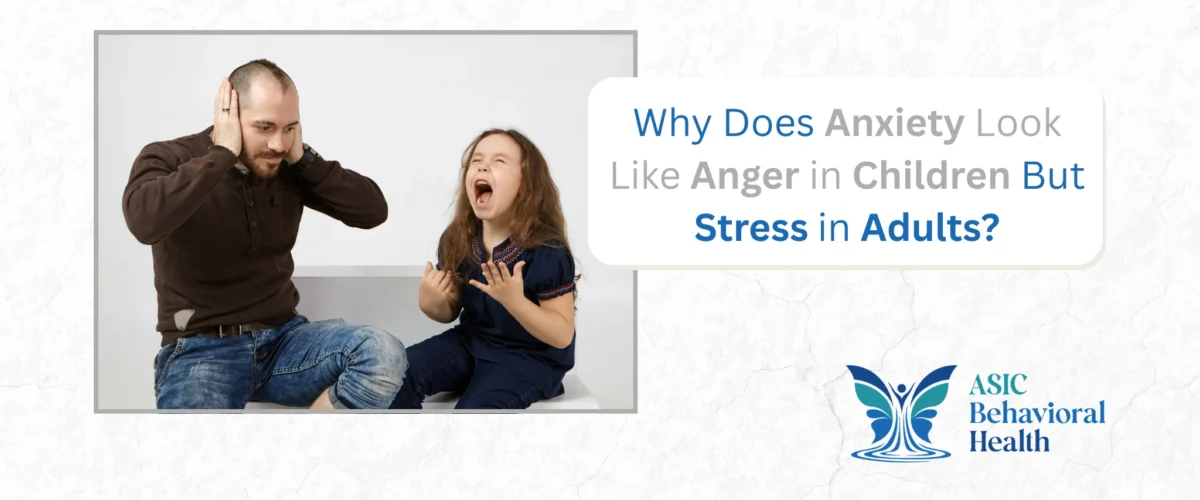
Why Does Anxiety Look Like Anger in Children but Stress in Adults?

Why Does Anxiety Look Like Anger in Children but Stress in Adults?

Visualize a steaming pot sitting on a burning stove. You force a thick, heavy lid down onto it. What occurs? Bubbling water overflows the rim and causes a spill, whereas keeping the lid off from the beginning lets the hot vapor dissipate gently. Anxiety behaves just like that restricted boiling liquid. It hides. Buried deep inside a person, the fierce pressure steadily climbs. It absolutely must find a vent.

The Brain and the Built-In Alarm System

Every human has an alarm system wired inside their brain. According to scientists, this is called the fight-or-flight response and when you sense fear, even for a moment, your body responds. It is set to either run away from a scary thing or confront it directly. Today, this response can happen even when there is no real danger.
Adults constantly try to suppress this loud ringing alarm. They grind through their packed workday because they have demanding jobs to do. This forces deep, silent stress inside their bodies. Kids do not know how to mute the loud alarm at all. They just respond instantly to the terrifying noise in their head.
The Centers for Disease Control and Prevention highlight that anxiety is a typical problem among the youth today. Caregivers frequently disregard the discrete signs. They think their kid is just acting stubborn. The child is not trying to give you a tough time on purpose. They are actually having a hard time on the inside.

Why Kids Show Anger When They Feel Anxious

Children often do not possess the extensive vocabulary required to effectively express complex emotions. A seven-year-old cannot eloquently tell you they feel entirely suffocated by a hectic routine. Rather, their little brain just pounds the alarm bell.
Panic is anxiety’s true face. When youngsters face abrupt fright, they feel thoroughly stripped of all autonomy, completely powerless. To snatch back control (and safety), they attack. They use their screaming aggression as a solid shield, fiercely protecting themselves from inner fear.
Here are typical ways underlying anxiety looks identical to outward rage today:

  • Huge meltdowns over minor faults: A missing piece or wearing the wrong shoe can prompt a huge, screaming fit.
  • Refusing to go to school: They may roar, sob loudly, or vanish under their bed when departure time finally strikes.
  • Showing physical aggression: Shoving or hitting often erupts when you give them a basic chore they cannot mentally handle.

Ultimately, these frightening behaviors are just a giant, desperate cry for your deeply needed, steady guidance right now.

Why Adults Experience Anxiety as Stress and Heavy Worry

Bills, they show up relentlessly, demanding our precious cash. We hold onto stressful jobs simply to eat. Under this immense strain, adults are forced to push their raw anxiety deep inside. We swallow that burden, destroying our tired bodies and chaotic minds with unending chronic stress.
Adults often show their hidden anxiety in these very specific ways:

  1. Constant muscle tension: Shoulders stay tight up by the ears and jaws stay clenched tightly all day long.
  2. Racing thoughts at night: The tired mind will not stop thinking about terrible things (even when they are completely exhausted).
  3. Feeling extreme tiredness: Worrying takes up physical energy, which leaves you feeling totally drained by dinner time.
  4. Dealing with stomach issues: Constant stress hurts the stomach and causes long-term digestion problems that make you feel sick.

Adults try very hard to fix the invisible danger. They overthink every little detail. But the endless worry never really stops bothering them.

Common Triggers for Kids and Adults

Kids and adults worry about very different things in life.
For kids, bad triggers usually include sudden changes in their normal routine. Starting a new school year can cause weeks of angry outbursts at home. Taking a hard math test can also start the brain alarm ringing.
For adults, triggers are mostly tied to major life tasks and heavy duties. Missing a big work deadline can cause panic. Adults spend a lot of time worrying about the distant future, while kids mostly worry about what is happening right now.

How to Help Your Child Manage Anxious Feelings

Parenting a deeply worried kid exhaust you. But you can gently steer them safely through the storm. Try using these three proven, highly effective steps at home:

  • Stay grounded and totally calm: Your steady voice rapidly halts their spiraling, terrified thoughts.
  • Name it: Acknowledge their raw fear without ever assigning any blame.
  • Maintain structure: Predictable daily routines anchor children (even on weekends), making them feel incredibly safe and highly secure.

Find Lasting Relief and Support at ASIC Behavioral Health

Healing is possible. Whether you are soothing an explosive toddler or silently battling your own crippling burnout, you absolutely never need to shoulder this brutal weight by yourself, true help is out there for your whole weary family today.
At ASIC Behavioral Health, we treat every single generation. We easily identify those subtle, often missed signs of intense anxiety. Our highly trained experts will lean in and listen to your unique journey. Then? We craft a customized, highly precise roadmap that actually addresses your specific, unspoken challenges perfectly every time we meet.
Please take one long, deep, grounding breath today. Contact ASIC Behavioral Health right away to book an initial session with our team. Together, we will restore genuine tranquility to your exhausted household starting this very week.

FAQs

Q. Why do worried kids get angry?

Kids do not know the right words for big feelings. Fear makes their young brain panic. They act mad to feel safe and in control again.

Q. Why do adults hold stress inside?

Grown brains know how to hide fear. Adults just keep working to do their daily jobs. All that worry stays trapped inside the body.

Mental Health Red Flags in Kids vs  Adults: What to Know

Is It Just a Phase? How to Spot Mental Health Red Flags in Kids vs. Adults

Spotting mental health red flags means noticing lasting changes in how someone feels, acts, or sleeps.
Every child has hard days and every adult feels stress.
The key is knowing when a normal phase may be something more.
Let’s look at how to tell the difference.

What Makes a Behavior a Red Flag and Not Just a Phase?

A phase is usually short and has a clear cause. A red flag lasts longer, feels stronger and affects more areas of life.

CheckA PhaseA Red Flag
TimeDays to a few weeksTwo weeks or more
StrengthMild and easingIntense or getting worse
ReachOne area, like schoolMany areas, like school, friends, and home
CauseClear, like a test or moveNo clear cause, or the cause does not explain it

Use a three-part check:

  • How long has it lasted?
  • How strong is it?
  • How many areas of life does it affect?

If the answers point to long, strong and many, get help.

How to Spot Mental Health Red Flags in Kids

Sometimes, bad moods do not go away. When sad or angry feelings stay for more than two weeks, it might be a mental health red flag.
Early-onset conditions such as anxiety or childhood depression can sometimes initially look like bad behavior
Kids do not always have the right words to say they are hurting inside. Instead, they show their pain through their actions at home and at school. Teachers might even notice a big drop in their grades.
Watch for these warning signs in your children:

  • Crying a lot for no clear reason during the day
  • Having trouble sleeping at night or waking up with bad dreams
  • Refusing to go to school or refusing to play with best friends
  • Getting very angry and hitting people or breaking their toys
  • Losing focus easily or moving around way too much in class

At ASIC Behavioral Health, we offer gentle mental health care designed just for kids. We help families find the right answers so children can thrive and smile again.

What About Teens? The In-Between Stage

Teens may seem normal, but feel distress through their behavior. Monitor for changes in sleeping patterns, grades, peers, irritability, risky behavior and withdrawal.
Teens may also be more inclined to conceal problems because they do not want to be judged or to worry their moms and dads. A teen who says “I’m fine” while pulling away from everyone may need a gentle check-in more than a lecture.

How Do Adults Show Mental Health Changes?

Adults usually know when something inside feels wrong. However, many adults try very hard to push through the pain. They may take their relationship woes out on their temper. Adults are also much more likely to hide their struggles to protect their families from worrying.

How Can You Spot Mental Health Red Flags in Adults?

Adults show different warning signs than young kids. Look out for these warning signs in yourself or a loved one:

  • Feeling sad or empty for weeks
  • Sleeping too much or too little
  • Eating much more food or much less food than normal
  • Pulling away from close friends and loving family members
  • Having a lot of trouble doing everyday jobs at work or at home
  • Losing interest in fun hobbies you used to love doing

Can Mental Health Red Flags Show Up in the Body?

Yes, mental health problems can actually cause physical pain.
Children may have regular tummy aches. They may experience headaches just before the school bus stops. They are unable to describe their sense of worry, and therefore respond to stress on the level of the little body.
Adults feel this physical pain, too. They may develop tense shoulders, a headache, or a rapid heart rate. If your doctor says your body is just fine, but the pain persists, then it may be a mental health red flag. Your body is trying to tell you that your mind needs a long break.

Quick Guide: Comparing Kids and Adults

Sometimes it helps to see the signs side by side. Here is a simple look at how warning signs change depending on your age.

Warning SignHow It Looks in KidsHow It Looks in Adults
Mood ChangesCrying a lot, throwing loud fitsHiding sadness, feeling empty
Sleep HabitsHaving bad dreams, fighting bedtimeNot sleeping at all, staying in bed all day
Social LifeRefusing to play with school friendsCanceling plans, staying home completely alone
Physical SignsHaving frequent stomach achesGetting tight shoulders and bad headaches

What Should You Do if You Spot a Red Flag?

Do not panic. Start by talking openly.
Ask your child how they are feeling and listen without anger or judgment. Give them time to share.
If you are the one struggling, tell a trusted friend or family member.

What to Say and What Not to Say

Instead of: “What’s wrong with you?”
Try: “I’ve noticed you don’t seem like yourself lately. I’m here if you want to talk, no pressure.”
Instead of: “You’re fine, it’s just a phase.”
Try: “You don’t have to have the right words. Just tell me what’s been on your mind.”
Instead of: “Why are you acting like this?”
Try: “I’ve seen you pulling away from your friends. I miss seeing you happy. Can we talk about what’s going on?”
For adults, try: “I’ve been worried about you. Can we grab coffee and talk honestly? No judgment.”
The next step is to talk to a qualified mental health professional. They can help you understand what is happening and find the right support.

When Should You Get Help?

Do not wait for a crisis. Get help if signs last two weeks or more, are strong, or block school, work, or relationships. Half of all mental health disorders begin by age 14. CDC data shows 40% of high school students in the United States felt sad or hopeless almost every day for at least two weeks. Early help works.
Get help right away if there is any talk of self-harm or suicide. Call or text 988 for the Suicide and Crisis Lifeline.

At ASIC Behavioral Health, we make it easy for you. We look at the whole person, not just the single problem, treating both young children and adults with deep kindness and respect. We offer customized care plans, including:

  • Careful psychiatric assessment to deeply understand your needs
  • Safe and smart medication management to help balance your daily mood
  • Supportive talking sessions during your visits to help you cope with stress
  • A special focus on women’s health and minority mental health needs

Do not wait if you see warning red flags. Book an appointment with us today at ASIC Behavioral Health. Let’s help you and your whole family feel happy and well again.

FAQs

How do I know if my child needs professional help?

If negative behavior, lack of focus or deep sadness lasts for more than two weeks, seek professional advice.

Can mental health problems go away on their own?

Normal bad moods pass in just a few days. True mental health issues usually require support from a doctor or therapist to improve.

Can stress mimic mental illness in adults?

Yes, high stress can cause sleep problems and bad moods. However, if these feelings stop you from working or caring for yourself long-term, it may be a mental health condition.

Postpartum Blues

Are You Feeling Postpartum Blues or Is It Perinatal Depression?

Having a new baby is a massive life change. It brings many big changes to your life. You might feel very happy on some days. You might also feel very sad on other days. This is a very common thing.
Many new moms feel mixed up inside. They do not know why they feel so sad when they should be happy. You might ask yourself if what you feel is normal.
Many people talk about the postpartum blues. Other people talk about depression. It can be hard to know the difference between the two. Both can make you feel tired and upset. Both can make you cry.
However, they are very different. One goes away fast. The other stays for a long time and needs help from a doctor.

ASIC Behavioral Health is here to guide you through this time.

What Are the Postpartum Blues?

The postpartum blues are often called the baby blues. A very large number of new mothers get the baby blues right after giving birth.
Up to 80 percent of new moms feel this way. It happens because your body hormones change incredibly fast after you have your baby. You are also dealing with a severe lack of sleep from taking care of a crying infant.

How Long Do the Baby Blues Last?

The baby blues usually start just two or three days after you deliver your baby. The really good news is that these sad feelings do not last very long.
Most moms start to feel much better in one to two weeks. You do not need strong medical treatment for the typical baby blues. Extra rest, healthy food and loving help from your family are usually enough to make you feel like yourself again.

What Are the Common Signs of the Blues?

The signs of the baby blues are usually quite mild. They might make you feel upset at times, but you can still take good care of your new baby. Common signs to look for include:

  • Crying for no clear reason at all
  • Feeling moody or getting annoyed very quickly
  • Feeling extremely tired during the day
  • Having trouble falling asleep when the baby sleeps
  • Feeling slightly anxious about your new role as a mother

What Is Perinatal Depression?

Perinatal depression is a very serious mental health condition. It is much stronger and deeper than the baby blues.
The word perinatal means the entire time before and after the birth of a child. This specific condition includes the depression that starts while you are still pregnant. It also includes postpartum depression, which starts after the baby is finally born.
The National Institute of Mental Health clearly states that perinatal depression is a real medical illness that deeply affects the brain and the body.

When Does Perinatal Depression Start?

Perinatal depression can start during pregnancy. That’s called peripartum depression. It can also suddenly start up to one full year after you have your baby. It does not go away on its own like a simple cold. It lasts for many long weeks or even several months without proper care.

What Are the Signs of Perinatal Depression?

The warning signs of perinatal depression make it very hard to do your normal daily tasks. They can make it almost impossible to care for yourself and your sweet baby. You might easily notice these troubling signs:

  • Feeling deep sadness or crying heavily every single day
  • Feeling very angry or acting cranky all the time
  • Having zero interest in the baby or feeling completely detached
  • Eating way too much food or not wanting to eat anything at all
  • Sleeping for too many hours or not being able to sleep at night
  • Feeling heavy guilt or wrongly thinking you are a terrible mother
  • Having extremely scary thoughts about hurting yourself or the baby

If you have thoughts of harm, call 911 or go to the emergency room. You can also call the National Maternal Mental Health Hotline at 1-833-TLC-MAMA. It is free and open 24/7.

How Can You Tell the Difference Between Them?

It is vital to know the difference between the two so you can stay entirely safe. Since they share some confusing signs like crying and being tired, you need to closely look at three main areas.

Duration

Duration is one of the most useful clues. If you feel sad for just a few short days, it is highly likely you just have the blues. If your dark feelings last for more than two straight weeks, it is absolutely time to ask a doctor for help. Perinatal depression does not fade away quickly on its own.

Severity of Your Emotions

The simple blues might make you cry, but you can still easily smile at your baby. You still feel tiny moments of real joy. With true depression, the dark feelings stay all day long. The sadness feels very heavy and crushing. It completely takes away your joy and hope.

Impact on Everyday Activities

When you only have the blues, you can still successfully feed the baby. You can still manage to take a quick shower.
Perinatal depression makes these small everyday tasks feel entirely too hard. You might want to stay in your warm bed all day long. You might ignore your own basic hygiene and needs.

Why Does Maternal Mental Health Matter?

Taking good care of a mother is just as important as taking good care of a baby. There are huge hormonal and physical changes that occur during any pregnancy. A mother’s overall mental health shapes the entire family unit.
When mothers have untreated depression, it can have a significant impact on the development of a baby’s emotional and mental abilities. With help from a good healthcare provider, a courageous mom creates a much safer environment for her child to develop and flourish.
Sometimes, minority women are subject to numerous and greater inequities in accessing adequate mental health services. May perceive that others are not listening or judging them fairly.
Each woman is entitled to comprehensive, respectful treatment based on her individual life experiences. Taking care of women’s mental health leads to the overall well-being of local communities.

How Can Professional Support Help You Heal?

You do absolutely not have to fight terrible perinatal depression entirely alone. Professional medical help makes a truly massive difference. True healing often requires a smart mix of good daily habits and expert medical care.
At ASIC Behavioral Health, we offer compassionate psychiatric care for women navigating pregnancy and postpartum challenges. We place a special focus on women’s mental health and we understand the unique factors that affect your emotional well-being.

Dr. Adrian Lennon and our team provide a safe space for you. We offer thoughtful psychiatric assessments to understand exactly what you are experiencing. If medication is a good fit for you, we provide careful medication management.
We also include supportive therapy during these visits. This gives you a safe place to discuss your feelings, learn coping skills and track your progress. You deserve care that respects your unique story.
Please reach out for help today. Call ASIC Behavioral Health to learn more about our services. We are here to walk this path with you. You will get better with the right care. You are a good mom and you are doing your best. Let’s help you find your smile again.

FAQs

Can perinatal depression affect fathers?

Yes. Fathers and partners can also experience depression after a baby is born. The heavy stress of a new baby and a major lack of sleep affects both parents.

Is it safe to take medication for depression if I am breastfeeding?

Many medications are very safe to take while breastfeeding. A psychiatric professional can help you choose a safe option that protects both you and your growing baby.

Can the baby blues turn into perinatal depression?

The baby blues do not automatically turn into depression. However, if the sad feelings do not go away after two weeks, they may be a strong sign that perinatal depression is developing.

Common Mistakes Women Make When Seeking Mental Health Help

Common Mistakes Women Make When Seeking Mental Health Help

Women face many challenges in daily life. Work, family, relationships and personal needs can all cause stress.
At times, these pressures may affect sleep, mood and overall health. Seeking help is the best way to care for your mind. Sometimes, you might not know what kind of help you need.
At ASIC Behavioral Health, we understand these challenges. We want to help you make the best choices. By learning about common mistakes, you can find the right path sooner.
Here are some mistakes women make when seeking mental health help.

Mistake 1: Waiting Too Long to Ask for Help

Many women don’t reach out until they’re totally exhausted. You might think your stress is just normal. You might tell yourself that everyone feels tired. But you don’t have to wait till you’re coming apart.
If you are depressed or anxious most days, this is a definite clue. It is better to get help early. Little things can grow into big things if they are not addressed.

Mistake 2: Putting Everyone Else First

Many women put their family’s needs before their own.
This is a very common trap. You might look at your schedule and see no free time. Your children have school. Your boss needs a project. Your parents need a visit. You put your own doctor visits at the bottom of the list. You might cancel your appointment because someone else needs you.
But if you are not healthy, you cannot help anyone else. You have to put your own needs at the top of the list sometimes. Making time for your appointment keeps you strong.

Mistake 3: Thinking You Must Fix It Alone

Another mistake is thinking you have to rebuild your mental health by yourself. Some ladies try to read books or sleep more to enhance their mood.
Good habits assist, but occasionally they are not enough. Depression and anxiety are serious illnesses. You would not try to fix a broken arm by yourself. Do not try to fix your mental health alone either.
Doctors and psychiatric nurses know how to help. They have the right tools and training.  You deserve to have a professional staff backing you up. Let the specialists enable you to heal at last.

Mistake 4: Not Telling the Whole Truth

It is hard to talk about your true feelings. When a doctor asks how you are, you might smile and say, “I’m fine.”
Many women hide their feelings because they feel shy. You might worry that the doctor will judge you.
Doctors are there to help you, not to judge. If you hide your sad thoughts, your doctor cannot help. You must be honest about how much you hurt.
Share these feelings with your doctor:

  • If you cry a lot
  • If you cannot sleep
  • If you feel overwhelmed

Being honest gives your doctor the clear picture they need to make a good plan.

Mistake 5: Ignoring Physical Signs of Stress

Your mind and body work together. Stress can affect both.
You may have a headache, a sore stomach, or feel tired all day. You may also have trouble falling asleep or staying asleep.
These signs can have many causes. They may be linked to stress, but they may also be due to other health problems.
Do not ignore them. Talk to your doctor about how you feel.
At ASIC Behavioral Health, we help people who have problems such as anxiety and insomnia.

Mistake 6: Forgetting Specialized Care for Women

Women go through many life changes. Your body changes, your hormones change and your roles change. All these things affect your mood.
General care is useful, but women often need care that understands how a woman’s body and mind work together.
Look for care that focuses on women’s mental health and makes every patient feel understood. You deserve care made for you.

Mistake 7: Using Unhealthy Ways to Cope

Some women try to feel better by drinking alcohol or using drugs. Some women eat too much or too little. Some women sleep all the time. These things can feel fantastic for a little while. But they don’t solve the problem. They can make it worse still.
It’s best to handle it healthily. You can try deep breathing. You can try talking to a friend. You can also get help from a doctor.

Mistake 8: Giving Up After One Try

Healing takes time. Some women go to one appointment and expect to feel perfect the next day. Sometimes a medicine needs a few weeks to start working, so don’t give up too soon.
Mental health care is a process. You may have to try several medications to see what works best for you, and you may have to talk things out for a few months.
Keep going to the doctor. If you continue on the route, you will progress.

You Are Not Alone

If you see yourself in these mistakes, do not feel bad. Many women make them. The important thing is to learn and move forward.
At ASIC Behavioral Health, we are here for you. Our clinic in Fayetteville, North Carolina, offers:

  • Psychiatric assessments
  • Medication management
  • Supportive therapy during appointments

We treat ADHD, anxiety, depression, PTSD, insomnia, bipolar disorder and more. We also focus on women’s health and minority health. We know that every woman’s journey is different.

Take the Next Step for Your Mental Health

It is time to put yourself first. Avoiding these common mistakes can lead to a much happier life.  Don’t wait for things to get worse. Don’t cover up your actual feelings. Be daring and ask for the support you’re worthy of. Recovery takes time, but you don’t have to walk that journey alone.
ASIC Behavioral Health is ready to help you find joy and peace again.

Call us today to book an appointment. Let’s work together to build a personal treatment plan just for you. Your bright and healthy future starts right now.

FAQs

Can a woman get help without knowing what is wrong?

Yes. A woman does not need to know the cause of her problem to ask for assistance. A doctor or therapist can listen, ask questions and assist her in finding the ideal next step.

Can I get mental health care if I belong to a minority group?

Absolutely. ASIC Behavioral Health’s priority is minority mental health. We value your culture and uniqueness. We want you to feel completely comfortable and safe when you talk to us.

How Supportive Therapy Boosts Your Medication Results

How Supportive Therapy Boosts Your Medication Results

Taking medication for your mental health is a brave move. It can help you feel like yourself again, but a pill alone doesn’t always get you to your goals. Your medicine needs a loyal partner, which is supportive therapy, to do its best work.
When you mix the right medication with a caring person to talk to, the results are simply better. At ASIC Behavioral Health, we know that medicine cannot instantly fix every single problem in your busy life. You need to feel truly heard and have simple, daily tools to handle hard days that pop up without warning. Let us look at why talking during your medication visits makes a huge difference in your healing path.

What Is Supportive Therapy?

Supportive therapy is a safe, calm place to share your exact feelings without any fear of judgment. It is not about digging into your deep past for long hours. Instead, it gives you real help right now. Your provider listens closely to your daily struggles and helps you solve normal problems.
During a session, your provider checks on how your medicine is working. But they also ask about your real life. Are you sleeping well at night? How is your job going this month? Are you feeling stressed at school? This helps them see the full picture of your overall health (which changes from day to day). They provide solid, friendly advice for coping with your week, demonstrating true teamwork as you and your provider work together to become stronger.

Why Medicine Needs a Helper

Medication targets the small chemicals in your brain so it can boost a low mood, ease sudden panic and help with scattered concentration. This is very important work, but medicine cannot teach you how to handle a terrible day at the office. It cannot show you how to calm down when you feel furious at a close friend.
Think of it like fixing a broken bicycle, where the medication repairs the broken chain so the bike can move forward again. Supportive therapy teaches you how to steer the bike safely, so you do not crash into a wall.
When you use both of these tools together, you heal your body and your mind at the exact same time. You learn brand new ways to act in tough moments while building strong habits. These new habits will protect your mind for many years to come.

Key Benefits of Combining Both

There are many great reasons why doing both is the smartest choice for your overall health. People who add simple talks to their medicine plan often feel better much sooner. The brain heals faster when it gets double the support.
Here are the biggest benefits you can expect from this mixed approach:

  • Finding the exact right dose: When you talk openly, your provider knows exactly how the pills are working inside your body. They can fix your dose fast if you feel too tired.
  • Learning daily life skills: You learn easy tricks to calm your mind when loud stress hits.
  • Stopping bad habits: You can easily find out what makes you feel bad and step away from it forever.
  • Feeling less alone: Having a smart expert listen to your deep worries makes heavy days feel very light.
  • Building high confidence: As you manage your own feelings, your trust in yourself grows incredibly fast.

What to Expect During Your Visit

Stepping into our clinic might feel a bit daunting right now. Do not worry. We want to make things incredibly smooth. Your initial visit is entirely about uncovering the real you, taking plenty of unhurried time to absorb your truly unique story.
Routine checkups here are quite simple. We ask pointed questions. Are the pills actually lifting your mood? If any adverse side effects suddenly pop up, we fix them immediately. Then, we talk. Together, we untangle complex feelings and gently sort out whatever frustrating stress piled up during your long week.
This unified method means no more repeating your history to multiple doctors. Sharing everything with one trusted person feels remarkably safe. Plus, it keeps your medical care deeply connected.

The Power of Whole-Person Care

Treating mental health is not a single, simple job. Every single brain and body works a little bit differently from the next one. This is exactly why we deeply believe in whole-person care. We care about your physical health and your mental health at the exact same time.
Sometimes poor sleep makes your worry much worse. Daily stress can make your body feel physically sick and by talking with you during your medication visit, we can spot these physical signs early. We catch them before they grow and adjust your care to protect your whole body.

Who Can Benefit from This Care?

This mixed approach works very well for almost everyone. Age does not matter. Both kids and adults see huge changes when they combine their medicine with caring talks.
For children, this care helps them do much better in school. It teaches them how to express their needs and learn to talk about big feelings instead of just acting out in class. For adults, it helps with tough job stress and navigating tricky family problems. It gives adults a clear and easy plan to find lasting peace in a very loud world, while teaching them to pause and breathe.

How ASIC Behavioral Health Cares for You

At ASIC Behavioral Health, we look at the whole person. We look far beyond the basic signs of illness. Dr. Adrian Lennon and our caring team provide thoughtful psychiatric care for both children and adults. Your life story is unique to you.
We offer supportive therapy directly during your medication management appointments. This setup saves you precious time. It also means the exact person fixing your medicine is the same person listening to your daily struggles. Please note that we do not offer therapy-only visits. We blend them closely together for the absolute best results.
We proudly treat many conditions, including:

  1. ADHD and daily focus issues
  2. Anxiety Disorders and sudden panic
  3. Deep Depression and low moods
  4. PTSD and painful past trauma
  5. Insomnia and difficult sleep troubles
  6. Bipolar Disorder mood changes

We also place a special focus on women’s mental health and minority mental health. Every single person must feel respected. Your background and culture matter as we build a space where you are always valued.

Start Your Healing Journey Today

You do not have to figure out your mental health alone. Getting the right care changes your whole life. Taking medicine is a wonderful first step and adding a safe space to talk makes your plan even stronger.
Are you ready to feel better? We are right here to help you every single step of the way. Reach out to ASIC Behavioral Health today to book your next appointment. Let us build a caring plan just for you.

FAQs

Q. What is Supportive Therapy?

It is a safe place to talk. A provider listens to daily problems. They help find easy ways to cope with a hard week.

Q. Do patients need two different doctors?

No. At ASIC Behavioral Health, one person does both things. The same person gives the pills and listens to problems. This keeps care very connected.

What Mental Health Challenges Do Minority Communities Face?

What Mental Health Challenges Do Minority Communities Face?

Mental health anchors a joyful life. Yet minority communities fight steep, invisible battles. Why? Money, unfair systems, and ingrained habits. Finding a doctor is tough. But securing one who genuinely understands your distinct culture (those unspoken social norms) is nearly impossible. People face significant obstacles and often navigate them alone. Today, we will uncover the real problems these specific groups confront daily. We will also examine how thoughtful, culturally aware care directly changes lives for the better. It offers light. It restores deeply fractured trust within our most forgotten, highly vulnerable neighborhoods.

The Reality of the Problem

Insights from the National Institutes of Health offer a vivid representation. Minorities do not actually experience mental illness more often. But once symptoms develop, they often experience longer periods of untreated illness.

Why?

This disparity exists because treatment remains profoundly unequal. National healthcare records show a pretty grim picture: white adults are far more likely to access psychiatric therapy than Hispanic, Black, or Asian individuals. Treatment options are really lacking and finding culturally responsive care can feel overwhelming. Marginalized people postpone care, meaning their overall condition is substantially worse before any doctor finally sees them. White kids receive their diagnosis twice as fast, so young minorities often miss out on the crucial help they need to do more than just get by, but to succeed in today’s world.

Big Barriers to Getting Help

Getting care should be simple, but for many families, it is not. Minority communities face giant walls blocking their path to healing.

  • High Costs: Therapy costs a lot of money and since many people lack good health insurance, getting proper care can feel impossible.
  • Lack of Transport: Clinics are rarely close by, making a two-hour bus ride a heavy burden for busy working parents.
  • Language Gaps: Imagine explaining your deepest fears in a language you hardly speak. If a doctor misses your words, the treatment fails.
  • Few Diverse Doctors: People want providers who deeply understand their culture, yet the United States needs far more minority doctors.
  • Deep Stigma: Talking about sadness is taboo in many cultures. People feel ashamed (often hiding their pain) instead of asking for help because they fear family judgment.

How Daily Life Causes Deep Stress

Life is incredibly stressful. For minority groups, that pressure compounds quickly. The CDC acknowledges this harsh truth: daily worries are harming our mental well-being. It’s a struggle for people to make rent and have healthy food to eat. When you’re focused on just surviving, your brain stays on high alert, which can cause major exhaustion. Discrimination adds another brutal layer. Being treated unfairly due to skin color leaves deep scars (an emotional toll that builds quietly over decades). Geography is really important, too. When neighborhoods have no safe parks or fresh grocery stores at all, it can feel like an overwhelming mental load every day. People feel entirely trapped. Ultimately, this profoundly unfair environment slowly erodes any remaining positive outlook regarding a better, fairer future for their families.

The Impact of Untreated Conditions

What happens when people cannot get help? The problems just grow bigger.
Small worries turn into panic attacks, while sadness turns into deep depression. Untreated mental health issues hurt entire families because parents struggle to care for their children. People lose jobs because they cannot focus and some may turn to substance use as a way to cope with the heavy emotional toll. This creates a terrible cycle of hurt, but breaking this cycle requires the right support.

Why Culturally Respectful Care Matters

Doctors need to do much more than write quick prescriptions, they need to truly listen. They must understand exactly where a person comes from.
Culturally respectful care means a doctor learns your unique background, asks about your traditions and respects your personal beliefs. When a doctor does this, you feel safe and brave enough to share your true feelings. This deep trust is the crucial first step toward real healing.

Finding Help at ASIC Behavioral Health

Help is out there right now and ASIC Behavioral Health understands these exact struggles. Meaningful care always starts with understanding the whole person.
ASIC Behavioral Health offers thoughtful psychiatric care for children and adults while focusing deeply on minority health and women’s health. They proudly treat many conditions, including:

  • ADHD
  • Anxiety disorders
  • Depression
  • PTSD
  • Insomnia
  • Bipolar disorder

How ASIC Behavioral Health Supports You

Care is built completely around your story. Dr. Adrian Lennon and the clinical team believe in a whole-person approach because physical and mental health are closely connected. We offer specific services that make a real difference:

  • Careful Assessments: We take extra time to learn your history, ensuring you are never rushed out the door.
  • Medicine Management: We find the right medicine for you, watch your progress closely and make changes when needed.
  • Supportive Therapy: During appointments, you have a safe space to talk and share your daily coping strategies.
  • Respectful Spaces: Our clinic is a totally safe zone where you will feel valued instantly.

Taking the First Step Forward

The healing journey can be challenging. If you are currently experiencing pain, don’t hesitate to seek the support you truly require. Reach out to someone you can confide in. Find caring medical clinics, those special places that truly appreciate your unique background. You deeply deserve care that actually respects you (exactly as you are), rather than ever letting cold fear dictate your health choices. Just begin. Make that brave phone call, confidently book an appointment and walk toward tomorrow.
Your personal, messy story matters. Your mental health matters.
Reach out to ASIC Behavioral Health today.

FAQs

Q. Do minority groups face more mental illness?

No. Minority groups do not experience mental illness more often than others. Access, that is the real issue. Once symptoms start, they usually go untreated for much longer. Finding proper care is simply harder for these communities.

Q. How does daily stress hurt mental health?

Stress builds up fast. Paying rent is hard. Buying healthy food is a struggle. Unfair treatment leaves deep emotional scars.