
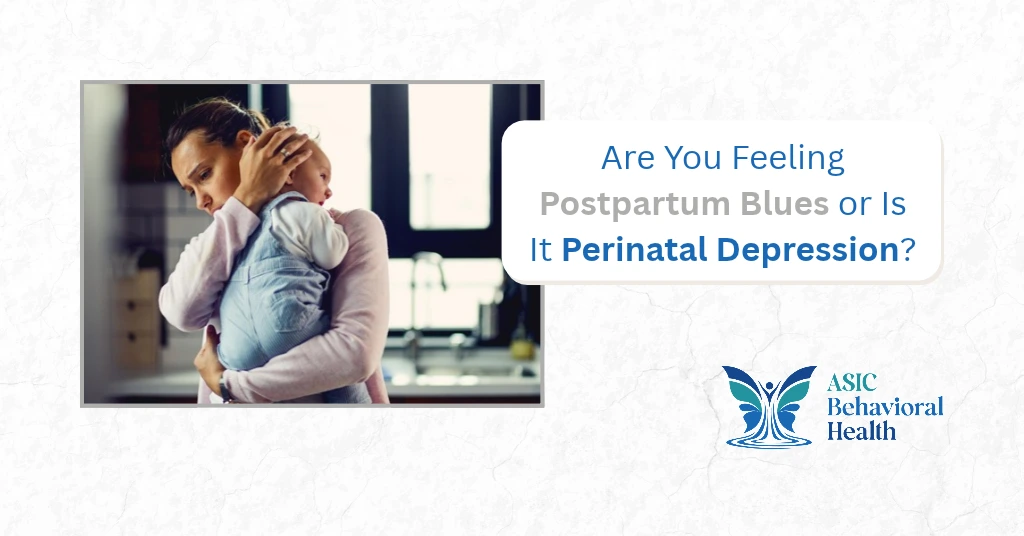
Having a new baby is a massive life change. It brings many big changes to your life. You might feel very happy on some days. You might also feel very sad on other days. This is a very common thing.
Many new moms feel mixed up inside. They do not know why they feel so sad when they should be happy. You might ask yourself if what you feel is normal.
Many people talk about the postpartum blues. Other people talk about depression. It can be hard to know the difference between the two. Both can make you feel tired and upset. Both can make you cry.
However, they are very different. One goes away fast. The other stays for a long time and needs help from a doctor.
ASIC Behavioral Health is here to guide you through this time.
What Are the Postpartum Blues?
The postpartum blues are often called the baby blues. A very large number of new mothers get the baby blues right after giving birth.
Up to 80 percent of new moms feel this way. It happens because your body hormones change incredibly fast after you have your baby. You are also dealing with a severe lack of sleep from taking care of a crying infant.
How Long Do the Baby Blues Last?
The baby blues usually start just two or three days after you deliver your baby. The really good news is that these sad feelings do not last very long.
Most moms start to feel much better in one to two weeks. You do not need strong medical treatment for the typical baby blues. Extra rest, healthy food and loving help from your family are usually enough to make you feel like yourself again.
What Are the Common Signs of the Blues?
The signs of the baby blues are usually quite mild. They might make you feel upset at times, but you can still take good care of your new baby. Common signs to look for include:
- Crying for no clear reason at all
- Feeling moody or getting annoyed very quickly
- Feeling extremely tired during the day
- Having trouble falling asleep when the baby sleeps
- Feeling slightly anxious about your new role as a mother
What Is Perinatal Depression?
Perinatal depression is a very serious mental health condition. It is much stronger and deeper than the baby blues.
The word perinatal means the entire time before and after the birth of a child. This specific condition includes the depression that starts while you are still pregnant. It also includes postpartum depression, which starts after the baby is finally born.
The National Institute of Mental Health clearly states that perinatal depression is a real medical illness that deeply affects the brain and the body.
When Does Perinatal Depression Start?
Perinatal depression can start during pregnancy. That’s called peripartum depression. It can also suddenly start up to one full year after you have your baby. It does not go away on its own like a simple cold. It lasts for many long weeks or even several months without proper care.
What Are the Signs of Perinatal Depression?
The warning signs of perinatal depression make it very hard to do your normal daily tasks. They can make it almost impossible to care for yourself and your sweet baby. You might easily notice these troubling signs:
- Feeling deep sadness or crying heavily every single day
- Feeling very angry or acting cranky all the time
- Having zero interest in the baby or feeling completely detached
- Eating way too much food or not wanting to eat anything at all
- Sleeping for too many hours or not being able to sleep at night
- Feeling heavy guilt or wrongly thinking you are a terrible mother
- Having extremely scary thoughts about hurting yourself or the baby
If you have thoughts of harm, call 911 or go to the emergency room. You can also call the National Maternal Mental Health Hotline at 1-833-TLC-MAMA. It is free and open 24/7.
How Can You Tell the Difference Between Them?
It is vital to know the difference between the two so you can stay entirely safe. Since they share some confusing signs like crying and being tired, you need to closely look at three main areas.
Duration
Duration is one of the most useful clues. If you feel sad for just a few short days, it is highly likely you just have the blues. If your dark feelings last for more than two straight weeks, it is absolutely time to ask a doctor for help. Perinatal depression does not fade away quickly on its own.
Severity of Your Emotions
The simple blues might make you cry, but you can still easily smile at your baby. You still feel tiny moments of real joy. With true depression, the dark feelings stay all day long. The sadness feels very heavy and crushing. It completely takes away your joy and hope.
Impact on Everyday Activities
When you only have the blues, you can still successfully feed the baby. You can still manage to take a quick shower.
Perinatal depression makes these small everyday tasks feel entirely too hard. You might want to stay in your warm bed all day long. You might ignore your own basic hygiene and needs.
Why Does Maternal Mental Health Matter?
Taking good care of a mother is just as important as taking good care of a baby. There are huge hormonal and physical changes that occur during any pregnancy. A mother’s overall mental health shapes the entire family unit.
When mothers have untreated depression, it can have a significant impact on the development of a baby’s emotional and mental abilities. With help from a good healthcare provider, a courageous mom creates a much safer environment for her child to develop and flourish.
Sometimes, minority women are subject to numerous and greater inequities in accessing adequate mental health services. May perceive that others are not listening or judging them fairly.
Each woman is entitled to comprehensive, respectful treatment based on her individual life experiences. Taking care of women’s mental health leads to the overall well-being of local communities.
How Can Professional Support Help You Heal?
You do absolutely not have to fight terrible perinatal depression entirely alone. Professional medical help makes a truly massive difference. True healing often requires a smart mix of good daily habits and expert medical care.
At ASIC Behavioral Health, we offer compassionate psychiatric care for women navigating pregnancy and postpartum challenges. We place a special focus on women’s mental health and we understand the unique factors that affect your emotional well-being.
Dr. Adrian Lennon and our team provide a safe space for you. We offer thoughtful psychiatric assessments to understand exactly what you are experiencing. If medication is a good fit for you, we provide careful medication management.
We also include supportive therapy during these visits. This gives you a safe place to discuss your feelings, learn coping skills and track your progress. You deserve care that respects your unique story.
Please reach out for help today. Call ASIC Behavioral Health to learn more about our services. We are here to walk this path with you. You will get better with the right care. You are a good mom and you are doing your best. Let’s help you find your smile again.
FAQs
Can perinatal depression affect fathers?
Yes. Fathers and partners can also experience depression after a baby is born. The heavy stress of a new baby and a major lack of sleep affects both parents.
Is it safe to take medication for depression if I am breastfeeding?
Many medications are very safe to take while breastfeeding. A psychiatric professional can help you choose a safe option that protects both you and your growing baby.
Can the baby blues turn into perinatal depression?
The baby blues do not automatically turn into depression. However, if the sad feelings do not go away after two weeks, they may be a strong sign that perinatal depression is developing.

No comment