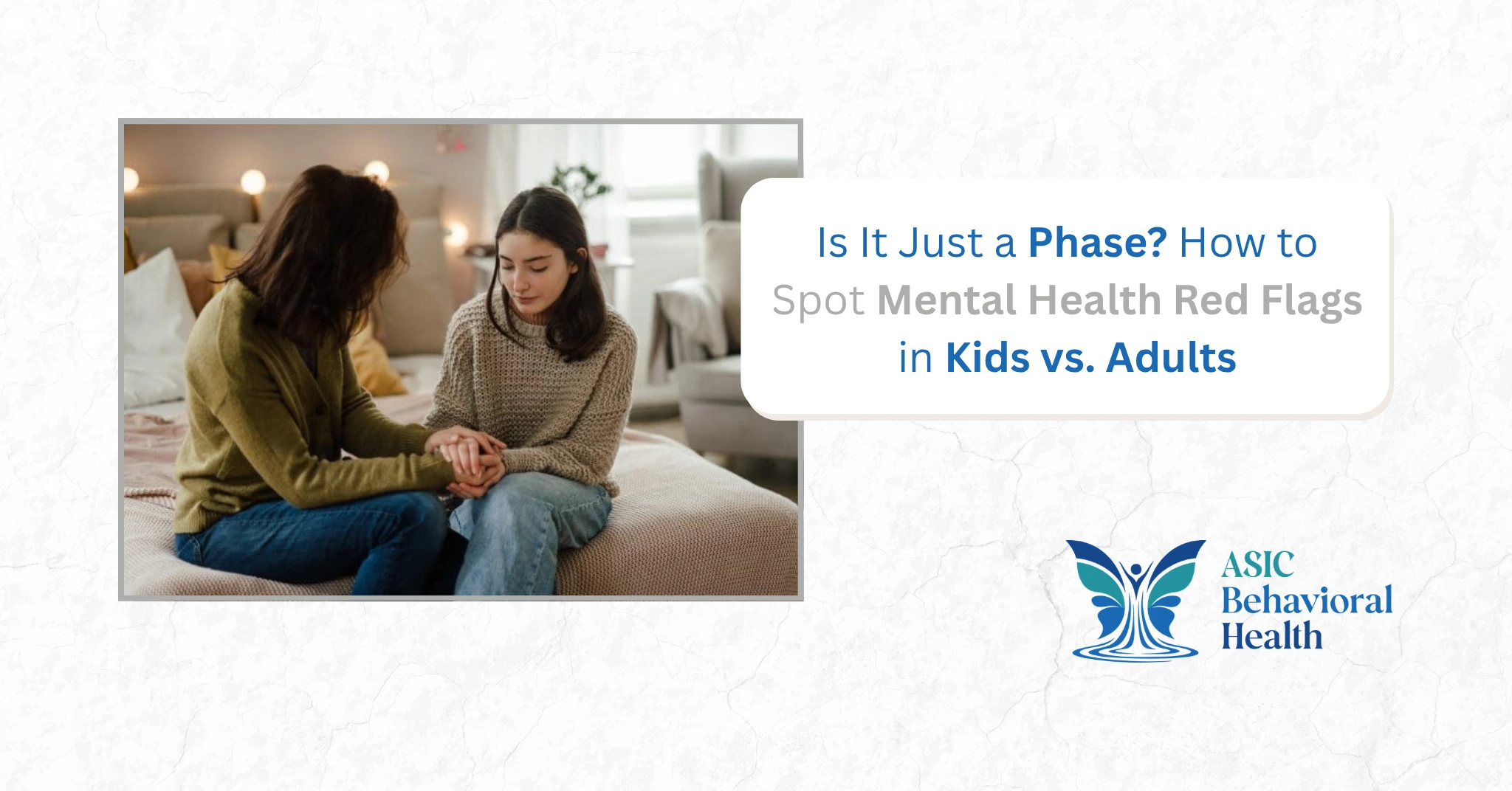
Spotting mental health red flags means noticing lasting changes in how someone feels, acts, or sleeps.
Every child has hard days and every adult feels stress.
The key is knowing when a normal phase may be something more.
Let’s look at how to tell the difference.
What Makes a Behavior a Red Flag and Not Just a Phase?
A phase is usually short and has a clear cause. A red flag lasts longer, feels stronger and affects more areas of life.
| Check | A Phase | A Red Flag |
| Time | Days to a few weeks | Two weeks or more |
| Strength | Mild and easing | Intense or getting worse |
| Reach | One area, like school | Many areas, like school, friends, and home |
| Cause | Clear, like a test or move | No clear cause, or the cause does not explain it |
Use a three-part check:
- How long has it lasted?
- How strong is it?
- How many areas of life does it affect?
If the answers point to long, strong and many, get help.
How to Spot Mental Health Red Flags in Kids
Sometimes, bad moods do not go away. When sad or angry feelings stay for more than two weeks, it might be a mental health red flag.
Early-onset conditions such as anxiety or childhood depression can sometimes initially look like bad behavior
Kids do not always have the right words to say they are hurting inside. Instead, they show their pain through their actions at home and at school. Teachers might even notice a big drop in their grades.
Watch for these warning signs in your children:
- Crying a lot for no clear reason during the day
- Having trouble sleeping at night or waking up with bad dreams
- Refusing to go to school or refusing to play with best friends
- Getting very angry and hitting people or breaking their toys
- Losing focus easily or moving around way too much in class
At ASIC Behavioral Health, we offer gentle mental health care designed just for kids. We help families find the right answers so children can thrive and smile again.
What About Teens? The In-Between Stage
Teens may seem normal, but feel distress through their behavior. Monitor for changes in sleeping patterns, grades, peers, irritability, risky behavior and withdrawal.
Teens may also be more inclined to conceal problems because they do not want to be judged or to worry their moms and dads. A teen who says “I’m fine” while pulling away from everyone may need a gentle check-in more than a lecture.
How Do Adults Show Mental Health Changes?
Adults usually know when something inside feels wrong. However, many adults try very hard to push through the pain. They may take their relationship woes out on their temper. Adults are also much more likely to hide their struggles to protect their families from worrying.
How Can You Spot Mental Health Red Flags in Adults?
Adults show different warning signs than young kids. Look out for these warning signs in yourself or a loved one:
- Feeling sad or empty for weeks
- Sleeping too much or too little
- Eating much more food or much less food than normal
- Pulling away from close friends and loving family members
- Having a lot of trouble doing everyday jobs at work or at home
- Losing interest in fun hobbies you used to love doing
Can Mental Health Red Flags Show Up in the Body?
Yes, mental health problems can actually cause physical pain.
Children may have regular tummy aches. They may experience headaches just before the school bus stops. They are unable to describe their sense of worry, and therefore respond to stress on the level of the little body.
Adults feel this physical pain, too. They may develop tense shoulders, a headache, or a rapid heart rate. If your doctor says your body is just fine, but the pain persists, then it may be a mental health red flag. Your body is trying to tell you that your mind needs a long break.
Quick Guide: Comparing Kids and Adults
Sometimes it helps to see the signs side by side. Here is a simple look at how warning signs change depending on your age.
| Warning Sign | How It Looks in Kids | How It Looks in Adults |
| Mood Changes | Crying a lot, throwing loud fits | Hiding sadness, feeling empty |
| Sleep Habits | Having bad dreams, fighting bedtime | Not sleeping at all, staying in bed all day |
| Social Life | Refusing to play with school friends | Canceling plans, staying home completely alone |
| Physical Signs | Having frequent stomach aches | Getting tight shoulders and bad headaches |
What Should You Do if You Spot a Red Flag?
Do not panic. Start by talking openly.
Ask your child how they are feeling and listen without anger or judgment. Give them time to share.
If you are the one struggling, tell a trusted friend or family member.
What to Say and What Not to Say
Instead of: “What’s wrong with you?”
Try: “I’ve noticed you don’t seem like yourself lately. I’m here if you want to talk, no pressure.”
Instead of: “You’re fine, it’s just a phase.”
Try: “You don’t have to have the right words. Just tell me what’s been on your mind.”
Instead of: “Why are you acting like this?”
Try: “I’ve seen you pulling away from your friends. I miss seeing you happy. Can we talk about what’s going on?”
For adults, try: “I’ve been worried about you. Can we grab coffee and talk honestly? No judgment.”
The next step is to talk to a qualified mental health professional. They can help you understand what is happening and find the right support.
When Should You Get Help?
Do not wait for a crisis. Get help if signs last two weeks or more, are strong, or block school, work, or relationships. Half of all mental health disorders begin by age 14. CDC data shows 40% of high school students in the United States felt sad or hopeless almost every day for at least two weeks. Early help works.
Get help right away if there is any talk of self-harm or suicide. Call or text 988 for the Suicide and Crisis Lifeline.
At ASIC Behavioral Health, we make it easy for you. We look at the whole person, not just the single problem, treating both young children and adults with deep kindness and respect. We offer customized care plans, including:
- Careful psychiatric assessment to deeply understand your needs
- Safe and smart medication management to help balance your daily mood
- Supportive talking sessions during your visits to help you cope with stress
- A special focus on women’s health and minority mental health needs
Do not wait if you see warning red flags. Book an appointment with us today at ASIC Behavioral Health. Let’s help you and your whole family feel happy and well again.
FAQs
How do I know if my child needs professional help?
If negative behavior, lack of focus or deep sadness lasts for more than two weeks, seek professional advice.
Can mental health problems go away on their own?
Normal bad moods pass in just a few days. True mental health issues usually require support from a doctor or therapist to improve.
Can stress mimic mental illness in adults?
Yes, high stress can cause sleep problems and bad moods. However, if these feelings stop you from working or caring for yourself long-term, it may be a mental health condition.

[…] pills for mental health brings up a huge question. Do they let you take your life back? Or do they just keep all your […]