
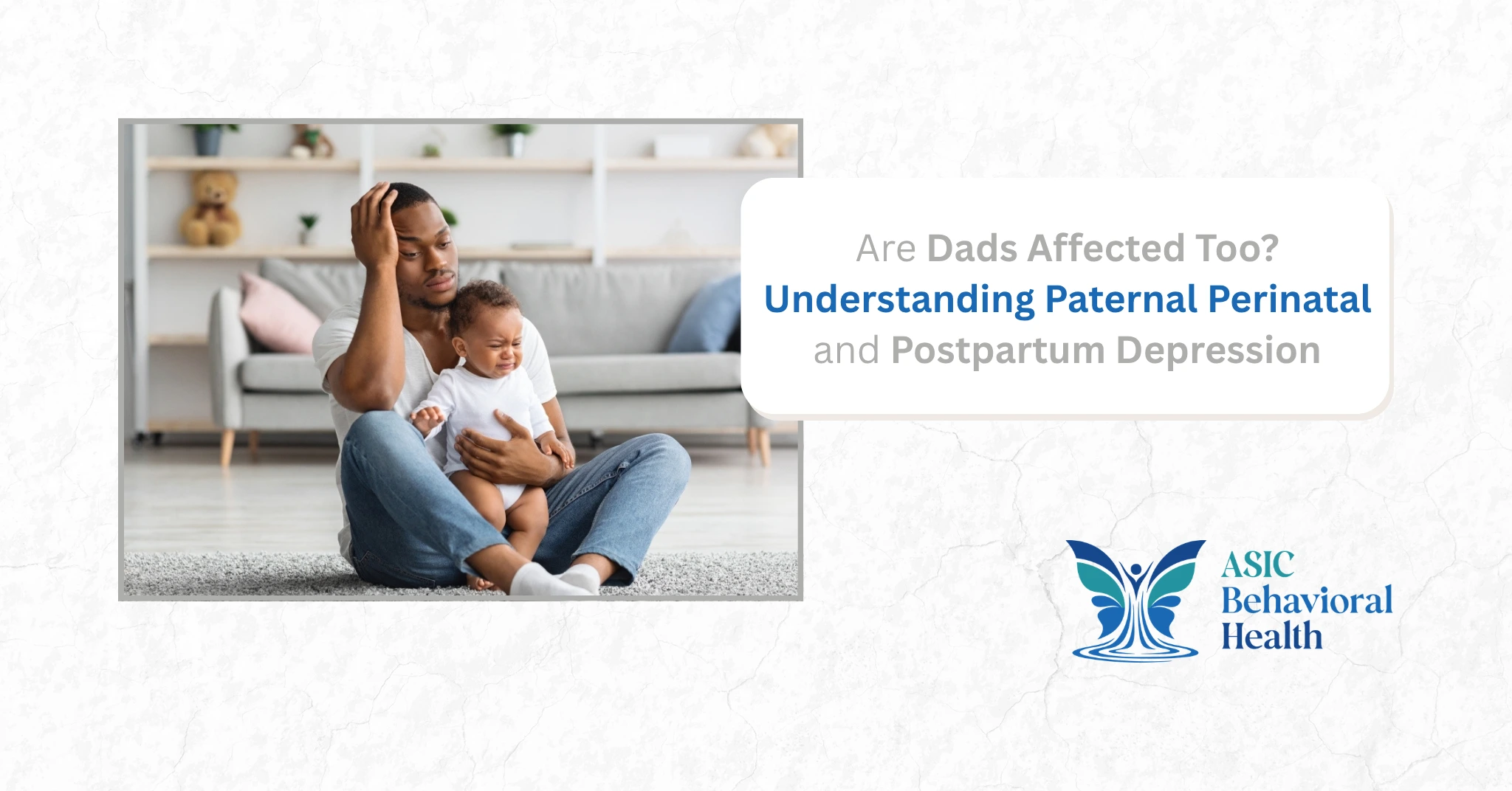
Yes, dads are affected too.
Paternal perinatal and postpartum depression is a medical condition. It can lead to deep sadness, anxiety, irritability, fatigue, and withdrawal.
Many dads have to deal with these emotions out of shame or the pressure to be “strong,” but it’s not uncommon and depression in new dads is treatable.
With professional treatment at ASIC Behavioral Health, you can recover fully.
What Is Paternal Perinatal Depression?
Most people associate depression during pregnancy and after childbirth with mothers. However, fathers face challenges of their own emotions during this period.
Paternal perinatal depression is depression that affects fathers during their partner’s pregnancy and the first year after the baby is born. When it occurs after birth, it may be called paternal postpartum depression. Both terms apply to fathers. Symptoms can begin during pregnancy or after the baby is born.
Doctors know about this condition. About 10% of fathers have depression in the perinatal period, according to research findings. The rates can be higher if anxiety and stress-related disorders are added.
How Common Is Depression in New Fathers?
New dads are not alone in how they feel.
Here are some key facts:
- About 1 in 10 dads may have depression during pregnancy or after the baby is born
- If a mom has depression after birth, her partner may also be at risk
- Without help, these feelings may last a long time
Getting help early can make a big difference.
Why Do Fathers Experience Perinatal Depression?
Several factors contribute to depression in new fathers. By knowing these causes and who is most vulnerable, families can get help immediately.
Hormonal Changes
Men experience hormonal shifts when their partner becomes pregnant. Testosterone levels can decrease and estrogen and prolactin increase. These changes make fathers ready to care for the baby, but may also lead to changes in mood management.
Sleep Deprivation
New parents face constant sleep disruption. Fathers may have to worry about work duties, while also having to get up with the baby at night to feed and care for the baby. Long-term lack of sleep impacts the brain’s chemical and emotional balance.
Primary Risk Factors
Clinical research indicates that certain fathers are at a much higher risk for developing paternal depression. These risk factors are:
- Maternal Depression
A father’s risk spikes significantly if his partner is currently experiencing maternal postpartum depression.
- Personal History
Any history of depression or anxiety in the past.
Socioeconomic Stress: Financial insecurity or significant dissatisfaction before childbirth.
- Obstetric Complications
A colic baby, a premature birth, or a traumatic delivery experience.
What Are the Signs and Symptoms of Paternal Depression?
Fathers may show depression differently than mothers. Recognizing these signs helps families get support faster.
Common signs include:
| Symptom Category | Warning Signs in Fathers |
| Emotional | Sadness, irritability, anger, mood swings |
| Action | Staying away from family or not wanting to care for the baby |
| Physical | Feeling tired, eating more or less, or having trouble sleeping |
| Cognitive | Trouble thinking or making choices |
| Social Life | Staying away from friends and family |
Some dads may work too much to avoid stress at home. Others may drink more alcohol or stop doing things they once enjoyed.
If these signs last or make daily life hard, it is better to talk to a doctor.
How Is Paternal Depression Diagnosed?
If you recognize the symptoms above, a medical professional can help. Mental health is normally evaluated with standardized screening tools. You may be asked to complete the following questionnaires:
- Edinburgh Postnatal Depression Scale (EPDS)
- Patient Health Questionnaire (PHQ-9)
The simple “yes” or “no” questions asked and the evidence-based answers reported, allow your therapist or physician to get a fair assessment of the severity of your symptoms and determine what’s best for you.
How Does Paternal Depression Affect Families?
When Dad is depressed, it is difficult for the whole family.
Effects on the Child
Children with depressive fathers are at increased risk for behavioral disorders and developmental delays. Fathers who absent themselves from the picture lose critical opportunities to bond with their children and can also impact their children’s emotional security and social abilities later in life.
Effect on the Partner
A mum may feel isolated if her partner is depressed or withdraws.
She could have to work more at home and take care of the infant with less help. This can cause her to feel fatigued and stressed out.
It can be easier for families to live when both parents obtain aid.
What Are the Treatment Options for Paternal Depression?
Fathers don’t have to bear it alone. Several effective treatments help men recover and enjoy fatherhood.
Professional Counseling
Therapy allows fathers to express feelings without judgment. CBT helps people identify unpleasant thoughts and develop coping skills. Family therapy can help with communication and relationship issues.
ASIC Behavioral Health offers specialized counseling services for fathers experiencing perinatal and postpartum depression. Our staff is aware of the special concerns men have during transition. Visit us to learn about available programs.
Medication
Antidepressants may be useful for moderate or severe symptoms. Doctors work with patients to find the right medication and dosage that will not interfere with parenting responsibilities.
Evidence-Based Lifestyle Changes
In addition to professional care, dads can make daily simple steps to support their own mental wellbeing:
- Exercise
Try walking, playing a sport, or doing another fun activity
- Get more sleep
Take turns with your partner when caring for the baby at night
- Drink less alcohol
Alcohol can make sleep and sadness worse
- Spend time with your baby
Hold your baby, talk to them and enjoy quiet time together
When Should You Seek Professional Help?
Some signs mean it is time to contact a healthcare provider immediately:
- Thoughts of harming yourself or the baby
- Inability to function at work or home
- Persistent sadness lasting more than two weeks
- Substance abuse to cope with feelings
ASIC Behavioral Health offers caring treatment for fathers and families. Contact us to begin the healing process.
In the United States, call or text 988 for help during a mental health crisis.
FAQs
Do fathers with depression need medication?
Mild depression may improve with therapy and lifestyle changes. Moderate to severe cases often need medication and counselling.
Does paternal depression affect children long-term?
Untreated paternal depression can harm child development and lead to behavioral issues. Early intervention can reduce these risks.


No comment