
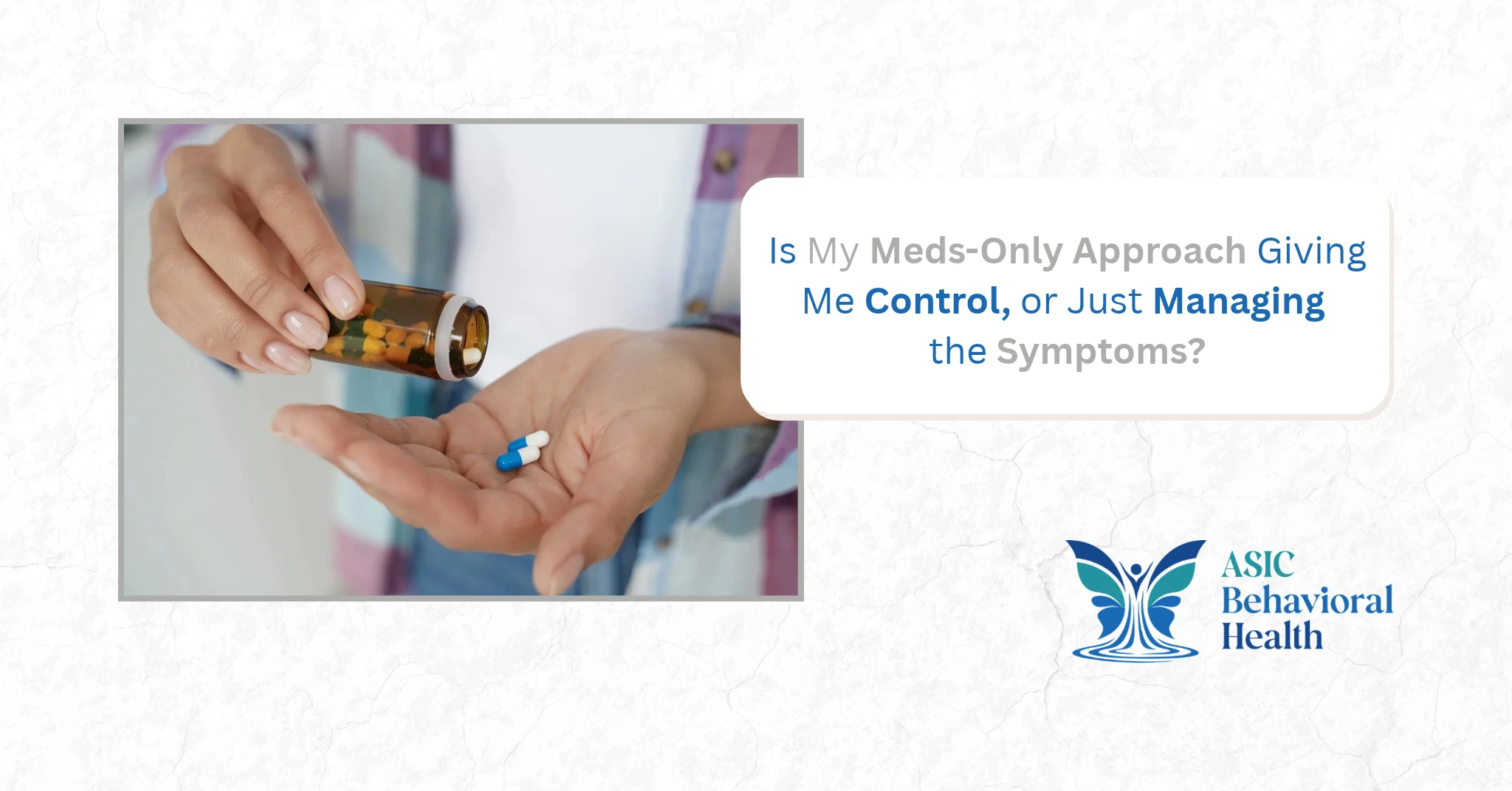
Taking pills for mental health brings up a huge question. Do they let you take your life back? Or do they just keep all your feelings quiet? Many people weigh this balance. It is a very fair thing to ask your doctor today. Medicine is a strong tool, and proper medication management helps ensure your treatment supports your mental health and overall well-being.
What “Managing Symptoms” Really Means
Managing symptoms means pills turn down the noise of your worst feelings, so you can just get through a tough day. They might calm deep worry (allowing you to rest) or they might lift a dark mood so you can rise. Real control goes way past making the bad pain stop. Control means you truly take charge of your health.
Signs Your Medicine Is Helping You Feel in Control
When the path is right, you will feel bright spots in your day. Here are the top signs of full control today:
- You sleep, eat and think much better than you did before your care.
- You know why you take each pill and what it does to your body.
- Your side effects are tiny and your doctor went over all of them fully.
- You feel stable during tense times, instead of just feeling dead and numb.
- You feel brave asking your doctor questions or pushing for tweaks to your plan.
Signs You May Only Be Managing Symptoms
Your medicine might only do part of the job, which leaves you feeling stuck. Here are the top signs that your health plan needs a really close look:
- Your bad moods rush right back in if you are late taking a single dose.
- No single specialist has ever said exactly how long you’ll need to take these new pills.
- You’re constantly exhausted, or you just don’t feel like yourself.
- Your doctor visits feel rushed and nobody asks about your real daily life.
- You get simple refills (again) without anyone checking on your healing progress.
Why Medicine Alone Can Leave Gaps
Two people can share the same problem but still feel quite different. Things like poor sleep habits and heavy stress clearly shape your mood. A drug can ease heavy emotional pain. But it cannot fix everything on its own, because it never teaches you how to calm your racing mind. The extra parts of life need more time, kind words and consistent help.
What Good Medication Management Looks Like
Your medicine plan is way more than grabbing a fast refill. It matters and requires deep care. Good plans use clear steps (and regular check-ins) to keep you very safe:
- A deep check of your feelings, your past health and your dreams.
- A first medicine and a dose that match your body and daily life.
- Fast visits with your doctor to track your progress and spot any weird side effects.
- Safe tweaks to your dose or medicine when you need a new path.
- Steady visits with your care team, even once you start feeling a lot better.
- A warm team effort between you, your doctor and your talking therapist.
How Supportive Therapy Adds to Your Control
Talking openly about your deep stress can make your medicine work much better. This warm support lets you spot bad habits and helps you learn new skills so you can beat tough days. At ASIC Behavioral Health, talking help is mixed right into your medicine visits when it fits best, giving you a totally safe space to share all of your heavy daily struggles.
Safety Tips to Keep in Mind
Medicine works best when you use it with careful attention to your body. Keep these safety points in mind:
- Never change your dose on your own because stopping fast can make you sick.
- Tell your doctor about every medicine and extra supplement you take.
- Share your side effects early on, even if they seem small.
- Be honest if you miss a dose so your doctor can make the best choices.
If you have thoughts of hurting yourself, call 988 right away or go to the hospital.
How ASIC Behavioral Health Can Help
ASIC Behavioral Health is a caring mental health clinic in Fayetteville, North Carolina. We offer custom, loving care for kids and adults who need real help. Dr. Adrian Lennon is an advanced practice Psychiatric Mental Health Nurse Practitioner. She views your whole life to give the best care possible. She never treats feelings in isolation.
Our clinic offers:
- Full checks on your daily mental health and well-being.
- Safe, ongoing care for your daily medication plan.
- Talk support during your regular medication visits.
- Kind care for ADHD, anxiety, depression, PTSD, insomnia and bipolar disorder.
- Extra focus on the vital mental health needs of women and minority groups.
Our patients are always heard fully. They are a big part of every single choice about their care.
Final Thoughts
Medicine can be a great, safe tool for your health (and taking it is nothing to ever hide). Still, true, lasting control only comes when you really know your plan. It comes when your doctor hears you and when you have deep support that goes way past the pill bottle.
If you are unsure whether your treatment works, you deserve a very good answer. Call ASIC Behavioral Health at (910) 672-6432 today. Or you can just book a quick, easy visit on our website to check your current plan with someone who truly cares.
FAQs
Q. How does real control feel?
Sleep and eating get much better. The mind feels clear. Patients feel brave enough to ask the doctor hard questions.
Q. Do pills give full control over health?
Pills help calm bad feelings. They do not fix everything alone. Full control means understanding the care plan (and feeling stable).
Q. What shows someone is just managing symptoms?
Bad moods come back fast if a pill is late. Doctor visits feel rushed. A person might feel numb or very tired all day.





No comment